
Defining The Terms in Modern Video Strategy
It is incredibly common for marketers and creators to use the terms interchangeably in casual conversation, but from a production standpoint, there is a massive conceptual difference between classical "subtitles" and modern "dynamic captions." Understanding this difference is the key to unlocking higher retention rates on platforms like TikTok, YouTube Shorts, and Instagram Reels.
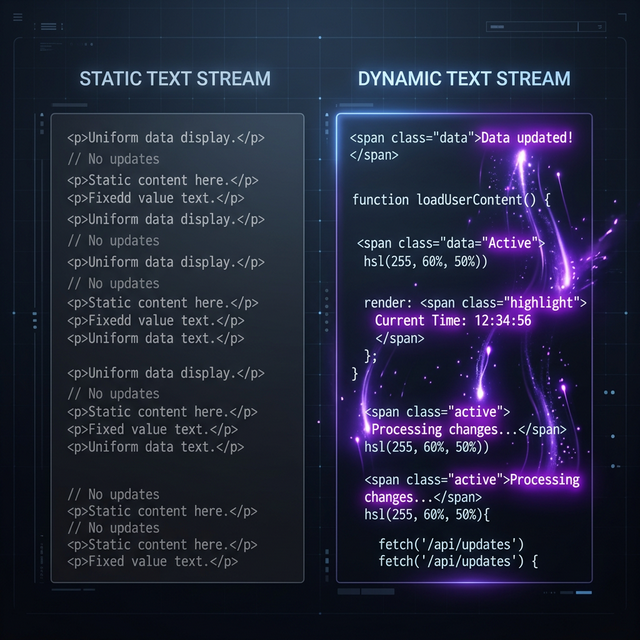
Subtitles: Subtitles are traditionally designed primarily for language translation and accessibility compliance. They exist as passive UI elements. They sit quietly and statically at the absolute bottom of the screen, waiting to be read by someone specifically seeking them out. They are long, slow, and unobtrusive.
Dynamic Captions: Dynamic captions are an active, aggressive design element of the video edit itself. Positioned near the center of the frame, they use bold fonts, vibrant colors, and rapid animations. They are a visual hook designed proactively to re-engage the user's attention every few seconds, regardless of whether the user is deaf, hard of hearing, or simply scrolling with the volume off.
The Cognitive Trap: Why Dynamic Text Works
What makes dynamic captions so insanely effective in short-form content is how they exploit fundamental human cognition and evolutionary biology. In simple terms: we are biologically wired to notice movement and change in our field of vision.
When a standard static subtitle block appears in its entirety and remains completely unchanged for four to six seconds, our brain quickly reads the sentence, registers the static object, and then subconsciously ignores it. In the context of the TikTok feed, a bored brain leads directly to an upward thumb swipe.
Conversely, when dynamic captions "pop" onto the screen word-by-word, perfectly in sync with the speaker's vocal cadence and rhythm, our eyes are naturally continuously drawn back to that center point of movement. It provides our brain with continuous, tiny micro-rewards of new stimulus and information precisely aligned with the audio track. This creates a mesmerizing loop, making it psychologically and physically difficult for a viewer to scroll away before finishing the sentence.
The Quantifiable Impact: Testing Retention
The debate between static and dynamic text isn't just theoretical. Creator studios, massive brand marketing agencies, and independent YouTubers have heavily A/B tested thousands of short-form videos across all major platforms. The data is consistent and overwhelming.
The analytics repeatedly reveal that high-energy edits utilizing dynamic, word-by-word captions can boost a video's baseline viewer retention by anywhere from 15% to over 25% compared to identical videos utilizing standard, static subtitles.
In the ruthless algorithmic arenas of short-form video, a 20% difference in "Average Percentage Viewed" (Retention) is often the sole defining factor that pushes a video over the algorithm's invisible threshold—transforming a video from a 'mildly interesting flop with 1,000 views' into a 'viral sensation with 1.5 million views.' The algorithm rewards content that keeps people on the platform. Dynamic captions do exactly that.
The Death of Manual Labor: Efficiency Is The Answer
Historically, the only reason creators did *not* use dynamic captions was the sheer, mind-numbing amount of manual labor required. Going into Adobe Premiere Pro or Final Cut, chopping a text layer into 150 individual words, adjusting the timing of each cut to match the phonetic waveform, and manually keyframing the scale of every word took multiple hours for a simple 60-second clip.
Today, leveraging artificial intelligence makes adding dynamic captions practically instantaneous. Specialized AI platforms like ReelWords listen to your raw dialogue, pinpoint the exact millisecond each syllable is spoken, and seamlessly sync the timing and animation flawlessly.
By incorporating a purpose-built AI captioning tool into your production workflow, you capture the 20% retention boost of dynamic text while spending zero extra hours parked in front of your editing timeline. You get the viral impact of professional editing with none of the grind.
When to Use Each
- Use dynamic captions for short-form feeds where you need to hold attention every few seconds.
- Use classic subtitles for translation, accessibility compliance, and long-form viewing.
- Use both together when you publish the same content to short-form platforms and long-form video.
FAQ
What is the difference between dynamic captions and subtitles?
Subtitles are static text at the bottom of the frame, mainly for translation and accessibility. Dynamic captions are styled, animated text near the center of the frame, designed to hold attention.
Do dynamic captions increase retention?
Movement and emphasis give viewers something to follow, which many creators find supports watch time. Track your own retention graph to see the effect on your audience. For style ideas, see Best Caption Styles for Reels, TikTok, and Shorts.
Are dynamic captions accessible?
They can be, if the text stays legible and correctly timed. For compliance work, read the Video Accessibility guide, which covers WCAG expectations.
Can I add dynamic captions without editing every word by hand?
Yes. AI captioning tools time each word automatically. See Animated Captions for how to create them.
Do dynamic captions work for long-form video?
They are built for short-form feeds. For long-form, cleaner subtitles are usually a better fit.
Try dynamic captions in ReelWords
See the caption styles and features and compare the Free and Pro plans.